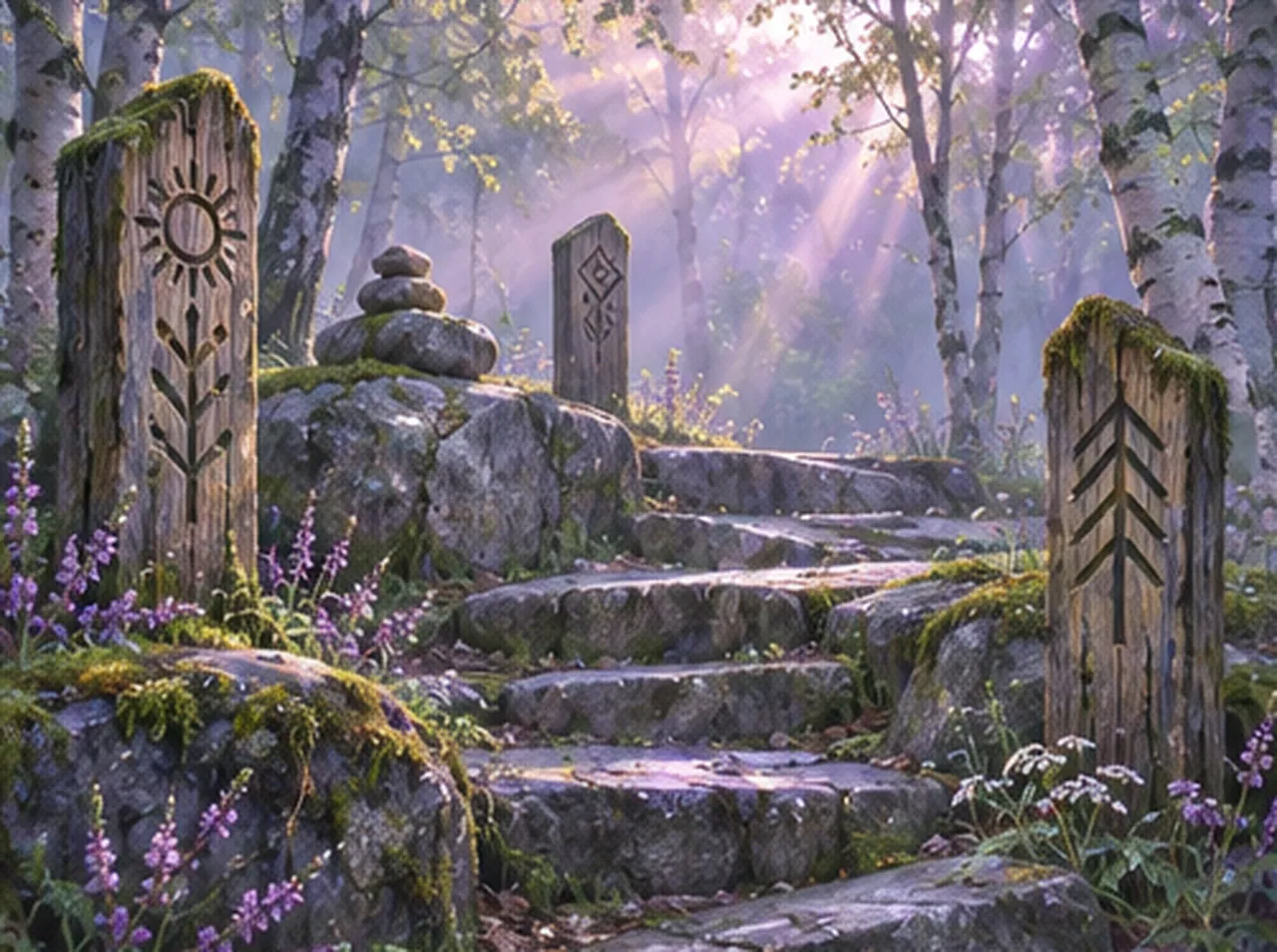
Count the Waystones at Dawn
The way back after a night bargain passes stones the traveler may remember from a different angle. Some once appeared as short outlines beneath the trees. Others were nearly hidden by a branch. Dawn changes which of them can be reached and some temporary paths become difficult to find. This trial gives the player a way to count the stones that still give a direction even if the borrowed path will no longer open on the same terms.
Follow the nearest old edge before reading the new light
Start the return with the stone just under the dry landing. A small chip in its upper edge remains visible even after its surrounding moss lightens. The next stone lies beyond a narrow shadow that no longer reaches its full width. Walk to the chip and look from beside it. The traveler should be able to place the bend using both stones before examining a bright opening farther on. The Branch That Kept a Promise gives one older mark a similar role when a traveler needs to return a favor rather than mistake a new shortcut for the end of the old agreement.
Leave out a stone that was only part of the borrowed path
One marker that guided the low route during the night now sits beyond a wall of intact roots. It cannot become the next step simply because its edge remains sharp. The player can refer to it in a drawing while finding a turn along the little stream. The Last Mark before Light deals with the earlier point at which that route started to go. This trial happens after the change. It gives the player a chance to compare the first spot they can actually reach and the last stone they can still see. The difference gives a route proposal a place to begin.
Put a trace of the other traveler at the crossing
The branch on the back side of the rise can still rest where it was lifted. A low stain in the moss describes how it once stood over the walk. If the earlier promise was to make a cleared return visible, the new angle gives somebody a chance to check that before taking the next offered trail. Move the stone nearest to that lift slightly away from the channel. It can receive a little of the same early light while remaining part of the landing rather than the route through the roots. That helps keep the different terms visible from the same place.
Give a small figure room to pause
At the point where the lighting changes, the field of roots can be hard to read. Several bright leaves make the line of a path look wider than it is. A low slab at the side of the channel gives the traveler a place to turn without stepping back through the narrow part. The Fork behind the Birch makes a similar retreat useful in dimmer conditions. In the morning example, stop on the slab and look for the chips that can be placed before or after the now hidden turn. A quiet move can connect the two old markers without asking the player to follow the nighttime sequence exactly.
Check the number against the places themselves
Ask which stones the traveler would draw on the next route and why. A precise count of everything seen can include an unreachable marker and omit a shorter crossing. A more useful count identifies the chipped stone where the return starts, the reachable one near the branch, and the place where the view loses the old path. That record gives the morning walk some room to take a different shape. The earlier terms have ended or been returned in a visible location. A player who wants a new arrangement can now bring the comparison to an ordinary opening without losing what the night taught them about the place.