What the Leaf Tokens Meant
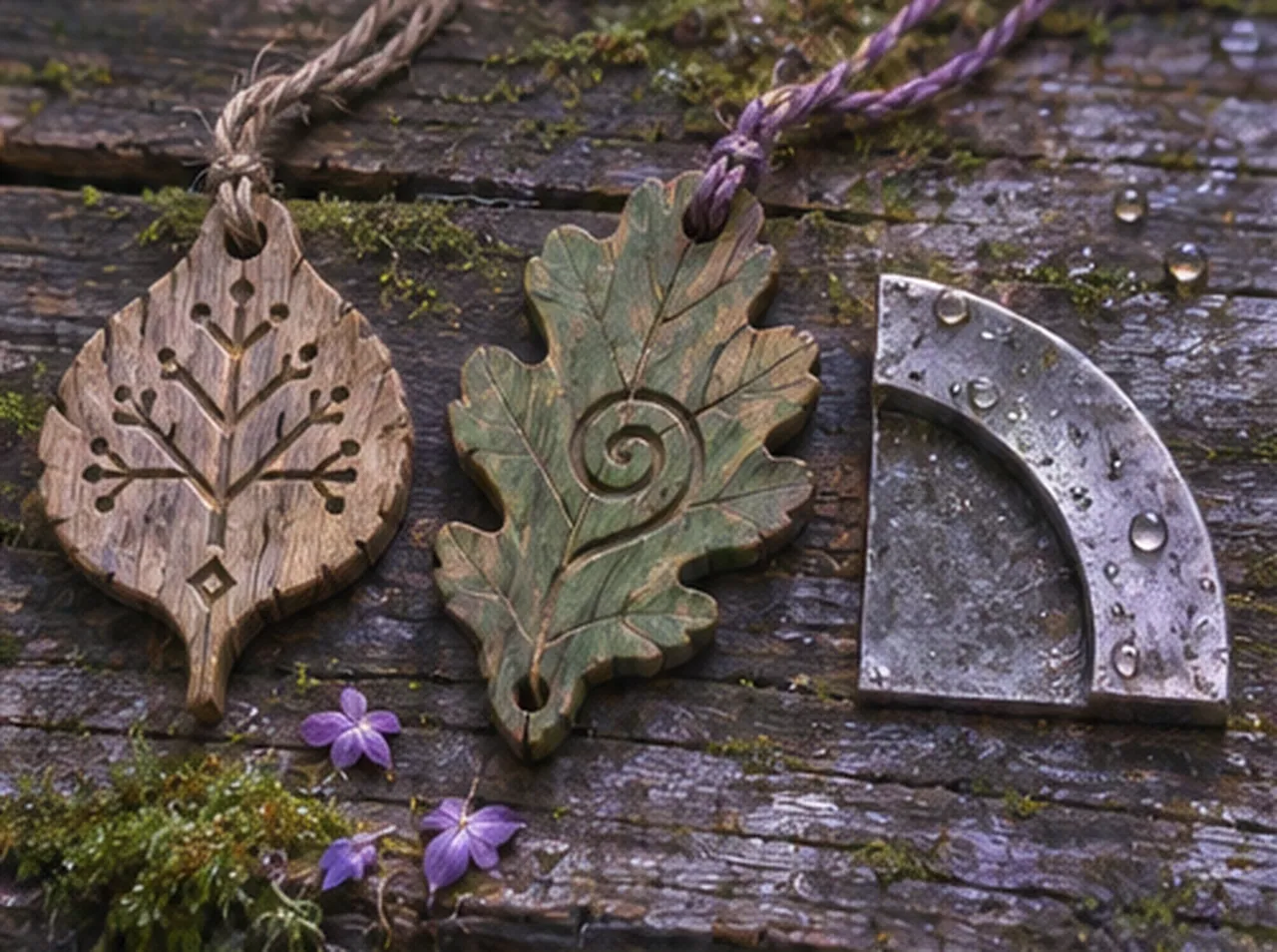
One trial uses two pieces of wood shaped like leaves to pass an agreement from one traveler to another. They have similar green surfaces and both can be placed near a handrail. The earlier version let their resemblance do too much work. One token was meant to show the branch had already been moved. The other could be offered to request the opening of a new path. To test the difference we put the two objects through separate exchanges and gave their edges and locations a reason to stay recognizable.
Read a token alongside the act it records
The traveler raises a branch and leaves the first token by a dry stick. The branch can now hold its place above the low walk. The token fits a split in its support with the narrow end down. Its shape can indicate it was left there deliberately. The full act still matters. A person needs to compare where the branch used to hang and how much of the path it leaves open. The Branch That Kept a Promise lets this position become a point to return to once the agreement has had time to change the way somebody else moves.
Make the other offer at a different surface
The second leaf lies across a flat steel half circle at the landing. Its wider edge can be seen against the metal even while the direction of the shade changes. A different spirit can take it from there to arrange a separate shortcut. Give the other speaker a reason to mention the landing and the direction of the fork. The first record referred to an act at the branch. If both tokens simply indicated somebody had a right to pass, their separate placement would add no useful information for the route. They work once each one describes a particular situation.
Preserve the traveler who reads them the wrong way
A player can take the second token back to the stick and see that its long edge rests above the split. A readable feedback line can mention which way it tilts. They have learned something from trying the material even if they thought it belonged to the branch. Let them take it to the steel surface without losing the earlier note. The Last Mark before Light follows a mark that survives after another part of the route has changed. This study preserves the fit of a thing so a memory about help can be compared without treating a common color as a shared promise.
Return the favor in the place where a person waits
At the end of the larger passage two ways out meet near the landing. The person who borrowed the branch could be there after walking farther into the woods. If the traveler has their first note, they can identify which direction the earlier offer promised to make easier. A different token might still buy a detour. The original favor will only become clear where a second person had room to return it. It should be possible to explain that distinction without speaking on behalf of every spirit that had a voice in the scene.
Compare the material after the light changes
Make an illustration of the two leaves after the clearing begins to brighten. Some color washes away and their outline stays distinct. Ask somebody to locate the place of each object before describing what it meant. If they can link an edge to the raised branch and another edge to an unmade offer, the objects are doing their own work. The agreements can remain small and overlapping while each has one visible way to check what it covered. That gives them enough weight to matter the next time the traveler chooses how to pass the fork.